
Best Pachymeter
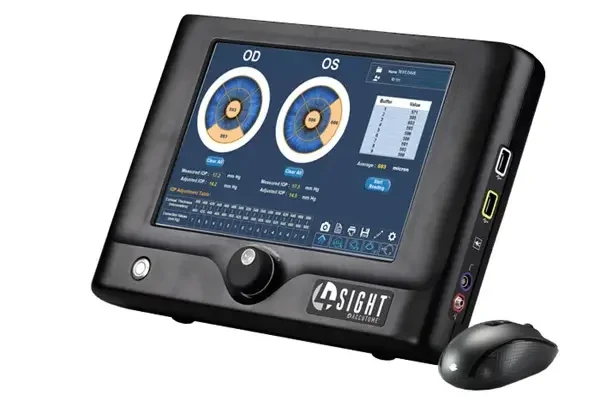
We understand that pachymetry (measuring corneal thickness) is fundamental in diagnosing glaucoma, planning refractive surgery and monitoring corneal disease. Even small differences in central corneal thickness (CCT) can affect glaucoma risk interpretation, and CCT is one of several factors used when screening for LASIK candidacy.
Carl Zeiss IOLMaster 700
Modern pachymeters use ultrasonic, optical or OCT-based technologies to deliver precise CCT readings. Some devices are handheld and battery-powered for quick screenings; others integrate full biometry suites in a tabletop unit. By the end, you’ll have the lay of the land on four standout pachymetry options we see clinics rely on for accuracy, workflow fit, and real-world value.
How We Selected the Best Pachymeters
To bring you an objective, data-driven list, we evaluated devices against these core criteria:
Accuracy & repeatability
- Target precision of ±5 µm or better
- Repeatability SD < 10 µm in peer-reviewed studies
Ease of use
- Handheld vs. tabletop form factors
- Contact vs. non-contact operation
Integration & workflow
- EHR/biometry software compatibility
- Footprint and scan speed
Service & cost
- Warranty options and support network
- Price range vs. feature set
Our recommendations are based on manufacturer specifications, published clinical literature when available, and what we see working in real clinics when teams are choosing refurbished equipment. We also lean on practical feedback from the clinics we support to make sure the shortlist reflects real workflow needs, not just spec sheets.
Haag-Streit Lenstar LS 900
For clinics needing comprehensive biometric data, we recommend the Lenstar LS 900. It merges precise pachymetry with full optical biometry in one tabletop unit.
Key Features
- Technology: Optical low-coherence reflectometry (OLCR) biometry with corneal thickness measurement.
- Corneal thickness and axial length are displayed with 1 µm and 0.01 mm display resolution, respectively (display resolution should not be confused with measurement accuracy).
- Functions: Axial length, ACD, keratometry and pachymetry in one scan
Pros
- Non-contact, enhanced patient comfort
- All-in-one data for IOL planning
Cons
- Higher upfront investment
- Larger footprint
Ideal Use
- High-volume cataract/refractive practices
Integration & Support
- Exports seamlessly to IOL-calculation software
- Pricing and service: Request a quote for current refurbished availability, and we’ll walk you through warranty and support options for your clinic.
Carl Zeiss IOLMaster 700
We recommend the IOLMaster 700 for surgeons demanding precise swept-source OCT pachymetry plus biometry.
Key Features
- Technology: swept-source OCT + optical pachymetry
- ZEISS reports SD of repeatability of 2.5 µm for central corneal thickness and 5 µm for axial length (per ZEISS technical specifications).
- Functions: lens thickness, keratometry, and fixation verification using the ZEISS cornea-to-retina scan to help reduce measurement errors.
Pros
- Comprehensive data in one measurement
- Extensive IOL formula library
- Non-contact, high-throughput imaging
Cons
- Steep learning curve
- Higher price tag
Ideal Use
- Premium cataract and refractive practices
Specs & Support
- Pricing and support: Request a quote for current refurbished inventory, and we’ll confirm configuration, software/licensing details, and the included warranty.
Final Thoughts on the Best Pachymeter Options
Whether you need portability, comfort, or full biometry integration, these top picks have you covered. Match the device’s strength, speed, precision, or multifunction capability to your practice’s volume and budget, and always trial devices first when possible. If you want help comparing options or sourcing a clinic-ready refurbished unit with warranty, reach out to Insight Eye Equipment to request a quote and speak with our team. Call today at (888) 711-2016.