
What is a Microkeratome?
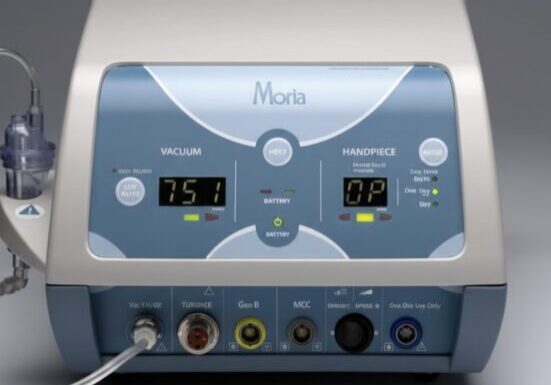
Microkeratomes still play a meaningful role in refractive and corneal surgery workflows, especially for practices that want a proven, blade based approach to flap creation and a workflow that stays consistent case after case.
In this guide, we break down what a microkeratome is, how it works, where it fits clinically (including LASIK and donor tissue preparation for endothelial procedures like DSAEK), and how it compares to femtosecond laser-created flaps, so you can make clearer decisions around equipment fit, workflow, and long-term support.
Quick Answer: What Does a Microkeratome Do in Eye Surgery?
A microkeratome is a blade-based mechanical system used to create a controlled corneal flap, most commonly for LASIK. If your practice runs bladeless LASIK, the flap is created by a femtosecond laser, so the microkeratome is used specifically for blade-based flap creation workflows.
Definition and Overview
In practical terms, a microkeratome is a lamellar cutting system designed to create a consistent pass across the cornea based on the selected head and ring configuration, along with how the system is maintained and calibrated. It is most associated with LASIK, and it can also support other corneal surgery workflows, including donor graft preparation for DSAEK.
Core components you’ll see on most systems include:
- The blade oscillates at high speed to create a smooth lamellar cut.
- The suction ring docks to the globe to stabilize the eye during the pass and create a firm platform for the cutting head.
- The drive unit powers blade oscillation and advances the cutting head across the suction ring.
- On console-based systems, the control unit supplies power and regulates suction and motor drive functions, depending on the model.
When the system is properly configured and serviced, these components support predictable flap creation and a more efficient OR workflow.
Mechanism of Action
At a high level, a microkeratome creates a corneal flap through the following steps:
- Eye stabilization: The suction ring docks and stabilizes the eye, creating a firm surface for a controlled pass.
- Applanation plate: The applanation plate flattens the cornea ahead of the blade to help create a more uniform flap thickness.
- Blade oscillation: The blade oscillates at high speed to create a smooth lamellar cut, with oscillation rate varying by system and model.
- Head translation: The cutting head advances across the cornea using either a motorized drive or a manual advance mechanism, depending on the system design.
- Flap creation: Intended flap depth and diameter are determined by the selected head and ring configuration for the system being used.
- Suction release: Suction is released and the ring is removed, allowing the surgeon to lift the flap and proceed with the next step of the procedure.
In practice, surgical teams follow standardized protocols for suction, head and ring selection, and flap handling to support consistent flap quality, with outcomes depending on both technique and equipment condition.
Key Applications
- In LASIK, the microkeratome creates a corneal flap that allows access for corneal reshaping during refractive correction.
- In automated lamellar keratoplasty, also called ALK, a microkeratome is used for non-laser lamellar refractive correction, most often discussed historically for higher myopia, with outcomes that can be less predictable than laser-based procedures.
- In DSAEK, an automated microkeratome is commonly used to prepare the donor graft by creating a thin posterior lamellar lenticule for endothelial replacement.
Microkeratome vs. Femtosecond Laser
Comparing microkeratomes and femtosecond lasers can help you choose the right flap creation approach for your practice, workflow, and case mix.
Speed:
- Microkeratome: Typically a faster flap-creation pass than femtosecond, with timing dependent on model and workflow.
- Femtosecond laser: Flap creation typically takes longer than a microkeratome pass, and total docking and laser time varies by platform and settings.
Cost Considerations:
- Microkeratome: Typically lower capital equipment cost than a femtosecond laser, with ongoing per-case consumables (e.g., blades/heads depending on model).
- Femtosecond laser: Generally higher upfront acquisition/ownership cost, with different ongoing costs tied to disposables and service contracts by platform.
Precision & Consistency:
- Microkeratome: Flap thickness can deviate from the intended target and may be less uniform across the flap, depending on the system, head selection, and technique.
- Femtosecond laser: Often selected for tighter flap architecture control and predictability (platform- and settings-dependent).
Procedure Considerations:
- Microkeratome: Like any flap-based approach, it has a known complication profile (including flap-related events and interface inflammatory issues such as DLK).
- Femtosecond laser: It introduces platform specific considerations such as opaque bubble layer and transient light sensitivity syndrome, in addition to suction and docking related workflow factors.
Refurbished Microkeratomes Available Through Insight Eye Equipment
If a blade-based microkeratome makes sense for your refractive or corneal workflow, the next step is choosing the exact system and setup that fits your OR. Below are the microkeratome options currently listed in our catalog, and you can click into any product to add it to a quote request so our team can confirm pricing, availability, and what’s included with the configuration.
- Bausch & Lomb Excellus Zyoptix XP Hansatome Microkeratome
Built for planar LASIK flap creation with an emphasis on repeatability and workflow efficiency, the Bausch & Lomb Excellus Zyoptix XP Hansatome Microkeratome is positioned as a dependable mechanical flap-creation option. It offers consistent flap thickness, labeled heads for clearer setup, and OR-friendly features such as right/left eye selection, variable hinge positioning, and a sterilizable motor sleeve.
- Bausch & Lomb Hansatome
For practices sourcing a refurbished microkeratome through Insight Eye Equipment, the Bausch & Lomb Hansatome is presented as a straightforward option.
- Moria Microkeratomes
Another refurbished option available through our catalog is the Moria Microkeratomes line, which gives practices flexibility based on preferred platform and configuration needs.
Final Thoughts on What Microkeratomes Are and How They Work
By weighing workflow speed, ownership costs, flap architecture considerations, and potential risks, you can choose the flap creation approach that aligns with your clinical goals and practice resources. Thorough preoperative screening and consistent adherence to surgical protocols are essential for safe, predictable outcomes.
When your workflow calls for a microkeratome, a properly refurbished system with dependable support matters. Insight Eye Equipment provides manufacturer-level refurbished ophthalmic equipment backed by a warranty, with responsive service and long-term servicing available. Call us at (888) 711-2016 to request a quote or talk through equipment fit and service options.