
Buying a Refurbished Operating Microscope: What to Check First
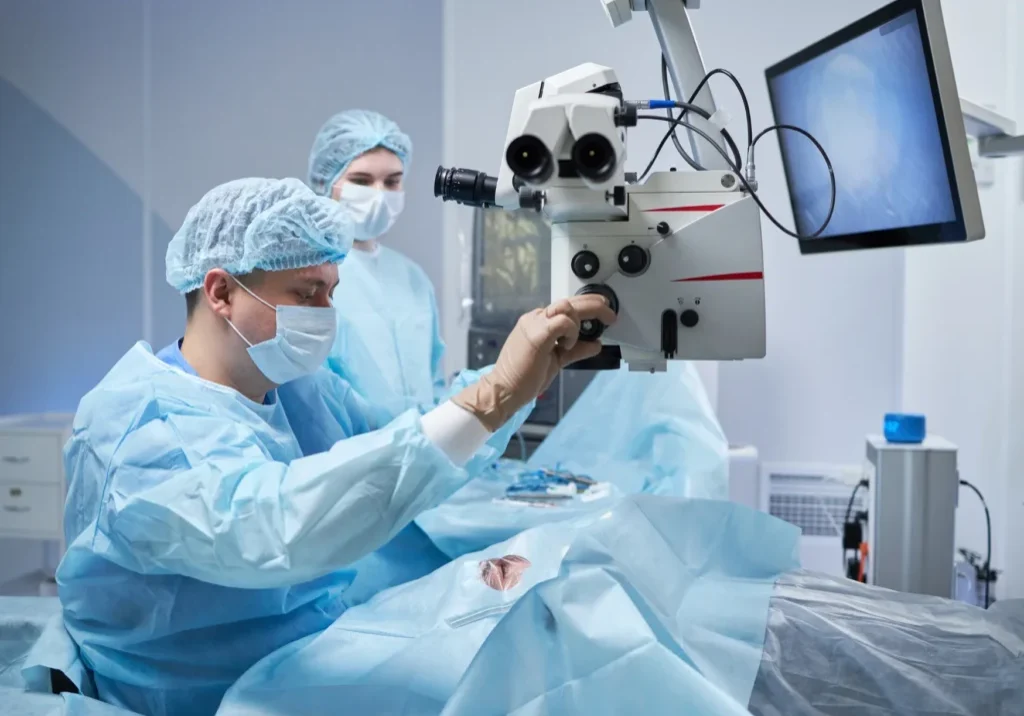
Cataract and retina surgeons spend more chair time looking through the oculars than almost any other piece of equipment in the OR. A refurbished operating microscope that’s slightly underpowered or poorly serviced shows up in every case, not just the hard ones. Before signing off on a unit, a few checks separate a good deal from an expensive mistake.
Quick Answer: What to Check Before Buying a Refurbished Operating Microscope
Confirm the optics and illumination source meet your surgical volume, verify documented service and calibration history, and make sure the boom or ceiling mount fits your existing OR layout before purchase. A refurbished operating microscope should come with a clear inspection report, not just a cleaned exterior and a new price tag.
Key Specs to Verify on a Refurbished Operating Microscope
Optics quality and illumination type drive most of the price difference between microscope models. If you’re also weighing imaging upgrades for the same surgical suite, our OCT selection guide runs through those tradeoffs, but the microscope itself deserves its own checklist first.
Optics and Illumination
Apochromatic optics correct color fringing better than achromatic setups, which matters most during retinal work where subtle tissue color differences guide decisions. Illumination source affects both image quality and long-term cost:
- LED sources run cooler and rarely need replacement across the device’s service life
- Xenon and halogen sources deliver excellent color rendering but require periodic bulb swaps and can drift in color temperature as they age
- Red reflex quality, easiest to judge with a live demo rather than a spec sheet
Boom vs. Ceiling-Mount Configurations
Floor-mounted booms move between ORs and cost less upfront. Ceiling mounts free up floor space and stay put, which suits a dedicated surgical suite better than a shared one. Confirm which configuration fits your room before falling for a discount on the wrong mount type.
Servicing and Calibration Records
Ask for the full service log, not a summary. A refurbished microscope that’s changed hands from a hospital system versus a single-surgeon ASC often carries a very different usage history, even at the same age.
Combined Procedure Compatibility
If your case mix includes combined phaco-vitrectomy procedures or anterior and posterior segment work in the same session, confirm the microscope supports the optical accessories both procedures need, such as a wide-angle viewing system or a beam splitter for an assistant scope. Some refurbished units are configured and sold for anterior-only use, and adding posterior capability later can cost more than buying the right configuration the first time.
Testing the Microscope Before You Buy
A spec sheet won’t tell you how a microscope actually feels in a live case. Before finalizing a purchase, request a hands-on demo, ideally in your own OR, and check:
- Focus and zoom response under foot pedal control, not just remote adjustment
- How the image holds up at the edges of the field, not just center-frame
- Noise level of the cooling fan, which matters more in a quiet microsurgical suite than it does on paper
- How quickly the assistant scope or camera feed syncs with the main optics
A dealer confident in a refurbished unit’s condition should have no issue arranging this before you sign.
Questions to Ask the Refurbishment Dealer
- How many hours are on the current bulb or LED module?
- Was the unit reground or recoated during refurbishment, or only cleaned?
- What’s the prior setting: hospital, ASC, or academic center?
- Is a loaner available if the unit needs service after delivery?
- What does the warranty cover beyond parts?
The Bulb and Camera Detail Most Buyers Skip
Most buyers focus entirely on the optics head and skip two details that affect day-to-day use just as much. First, illumination lifespan: LED sources are typically rated for tens of thousands of hours with minimal color drift, while xenon and halogen bulbs need periodic replacement and can shift color temperature noticeably as they age, changing how tissue looks mid-case. Second, camera and recording module compatibility. A microscope with excellent optics but an outdated or incompatible video head creates a documentation gap if your practice records cases for teaching, quality review, or patient education. Confirm the camera module integrates with your current recording or EMR workflow before finalizing the purchase, not after it’s installed.
Surgeons upgrading their microscope are often mid-cycle on other equipment too, and pairing the purchase with updated OCT technology for pre-op screening keeps the imaging and surgical schedule aligned. Practices adding refractive services around the same time should also look at corneal topographers for accurate keratometry before committing to a full equipment cycle.
How Long a Refurbished Operating Microscope Should Last
Unlike electronics-heavy diagnostic devices, the core mechanics of a surgical microscope, the optical train and stand, don’t degrade much with age when properly maintained. Many refurbished units in active use today are 10 to 15 years old and perform to spec, provided the illumination source, focus mechanism, and any digital add-ons have been serviced or upgraded along the way. That’s part of why a full service history matters more for this category than a manufacture date does.
Choosing the Right Refurbished Operating Microscope
The right refurbished operating microscope comes down to optics that match your case mix, a documented service history, and a mount configuration that fits the room you actually have. Skip any of those three and the savings from buying refurbished can disappear fast in downtime or rework.
Final Thoughts on How to Evaluate a Refurbished Operating Microscope Before Purchase
A refurbished operating microscope can provide lasting value when its optics, illumination, mounting system, and service history are carefully verified. Prioritize proven performance and compatibility with your surgical workflow rather than choosing solely by price. Insight Eye Equipment can help you compare available systems and select a microscope suited to your procedures and OR setup.
If IOL calculations are part of your next equipment cycle, our biometry devices guide is a good next stop. For microscope options currently in stock, call Insight Eye Equipment at (888) 711-2016.